
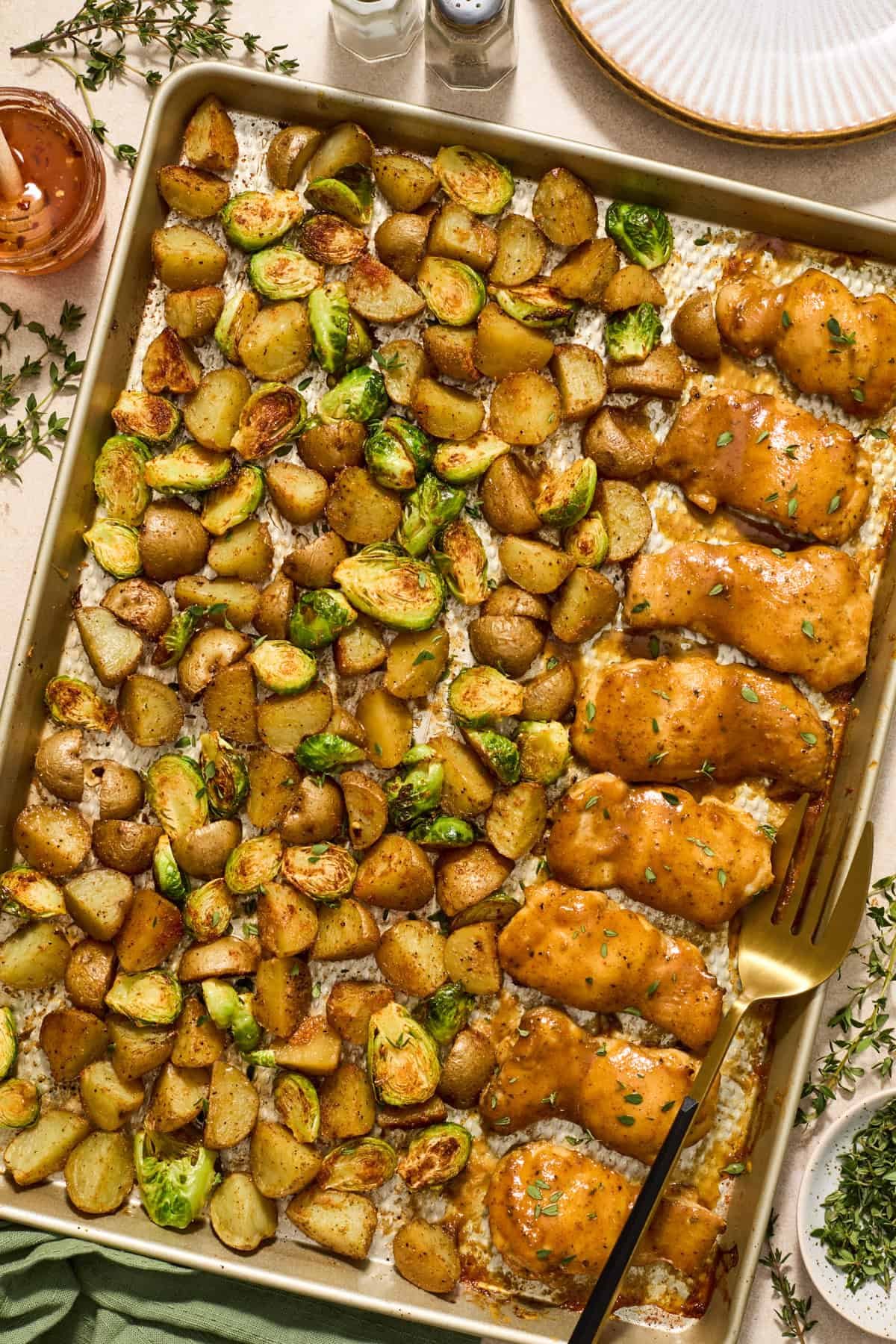
When you need a dinner that feels homemade without turning the kitchen upside down, Sheet Pan Honey Mustard Chicken is the kind of recipe worth keeping close. Juicy chicken is coated in a sweet and tangy honey mustard glaze, then roasted alongside colorful vegetables until everything is tender, caramelized, and wonderfully flavorful.
What makes this recipe especially appealing is how little work happens after the ingredients hit the sheet pan. The oven takes care of the roasting while the honey and mustard create a glossy coating that clings to the chicken and adds a savory-sweet flavor to the vegetables.
It is a practical weeknight dinner for busy families, but it is also good enough to serve when you want something comforting without spending your entire evening cooking. Sheet-pan chicken recipes are particularly useful because the chicken and vegetables can cook together, reducing both preparation and cleanup.
Why You’ll Love This Sheet Pan Honey Mustard Chicken
- Sweet, Tangy & Savory Flavor: Honey brings gentle sweetness while mustard adds a bright tangy bite, creating a glaze that makes simple chicken taste special.
- One-Pan Convenience: Everything roasts together on one pan, so you get a complete dinner without juggling several pots and pans.
- Juicy Chicken Every Time: The honey mustard coating helps keep the chicken flavorful while roasting, and a thermometer takes the guesswork out of knowing when it is done.
- Colorful Roasted Vegetables: Potatoes, carrots, broccoli, and red onion become tender and lightly caramelized as they roast alongside the chicken.
- Perfect for Busy Weeknights: Most of the preparation can be done ahead, making this an easy option when everyone is hungry and time is limited.
What Makes Homemade Better?
The honey mustard sauce is where homemade really earns its place.
Bottled honey mustard can be convenient, but making your own allows you to control the balance between sweetness, acidity, mustard flavor, and seasoning. A little apple cider vinegar keeps the sauce from tasting overly sweet, while garlic and paprika add depth.
You can also adjust the sauce depending on your family’s taste. Want it sweeter? Add a little more honey. Prefer more bite? Increase the Dijon mustard. Like heat? A small pinch of cayenne or red pepper flakes works beautifully.
The result is a sauce that tastes fresh rather than one-dimensional.
Ingredients You’ll Need

- Chicken thighs — Boneless, skinless chicken thighs stay tender and are forgiving during roasting. Chicken breasts can also be used, although they should be monitored carefully so they do not overcook.
- Dijon mustard — Gives the sauce its sharp, savory character and balances the sweetness of the honey.
- Whole-grain mustard — Adds texture and a slightly more rustic mustard flavor. It is optional, but particularly good if you enjoy a stronger mustard taste.
- Honey — Provides the natural sweetness that gives the chicken its beautiful glossy coating and helps encourage caramelization.
- Apple cider vinegar — Adds acidity to brighten the sauce and keep the honey from becoming overwhelmingly sweet.
- Garlic — Fresh minced garlic adds savory depth and complements both the mustard and roasted vegetables.
- Paprika — Brings gentle warmth and a beautiful color to the chicken.
- Olive oil — Helps the vegetables roast properly and encourages browning instead of leaving them dry.
- Baby potatoes — Their creamy centers and crisp edges make them a natural companion for honey mustard chicken.
- Carrots — Add natural sweetness and hold their shape nicely during roasting.
- Broccoli florets — Bring freshness and texture while developing delicious browned edges in the oven.
- Red onion — Becomes sweeter and softer as it roasts, adding another layer of flavor to the pan.
- Kosher salt — Enhances the natural flavor of the chicken, vegetables, and sauce.
- Freshly ground black pepper — Adds mild heat and helps balance the sweetness of the honey.
- Fresh parsley — A finishing touch that adds color and a fresh herbal note before serving.
Step-By-Step Direction
Step 1: Prepare the Oven and Sheet Pan
Preheat the oven to 425°F. Lightly grease a large rimmed sheet pan or line it with parchment paper for easier cleanup.
A large pan is important because the vegetables need room to roast. Crowding the pan can trap moisture and cause the vegetables to steam instead of becoming beautifully browned.
Step 2: Make the Honey Mustard Sauce
Add Dijon mustard, whole-grain mustard, honey, apple cider vinegar, garlic, paprika, salt, pepper, and a little olive oil to a bowl.
Whisk until the mixture looks smooth and glossy.
Taste the sauce before adding the chicken. If you prefer more sweetness, add a touch more honey. If you want a sharper flavor, add a little more Dijon mustard.
Step 3: Coat the Chicken
Pat the chicken thighs dry with paper towels. This small step helps the seasoning and sauce cling better to the surface.
Place the chicken into the honey mustard mixture and turn each piece until thoroughly coated.
Set aside while you prepare the vegetables.

Step 4: Prepare the Vegetables
Cut the potatoes and carrots into pieces that are reasonably similar in size so they cook evenly.
Add the potatoes, carrots, broccoli, and red onion to the sheet pan. Toss them with olive oil, salt, and black pepper.
Spread everything into as even a layer as possible.
Step 5: Add the Chicken
Nestle the honey mustard chicken among the vegetables.
Spoon any remaining sauce over the chicken, keeping most of the glaze on the chicken rather than allowing it to pool underneath.
Leave a little space between the pieces whenever possible. Good airflow helps the chicken and vegetables roast rather than steam.
Step 6: Roast Until Golden and Tender
Place the pan in the preheated oven and roast until the chicken is fully cooked and the vegetables are tender.
Cooking time can vary depending on the thickness of the chicken and the size of the vegetables, so use an instant-read thermometer rather than relying only on the clock.
Chicken should reach an internal temperature of 165°F in the thickest part before serving.
If the vegetables are browning faster than the chicken, loosely cover the chicken with foil while allowing the vegetables to continue roasting.
Step 7: Rest and Finish

Remove the sheet pan from the oven and allow the chicken to rest for several minutes.
Scatter freshly chopped parsley over the top just before serving.
The short resting period gives the juices time to settle, while the warm vegetables soak up some of the flavorful pan juices.
Serving Suggestions
- Serve with fluffy rice — White rice, brown rice, or wild rice works beautifully with the extra honey mustard juices.
- Add a simple green salad — A crisp salad with a light vinaigrette provides a fresh contrast to the warm roasted chicken.
- Serve with crusty bread — Warm bread is excellent for catching the flavorful sauce left on the pan.
- Pair with mashed potatoes — Creamy potatoes make this dinner especially comforting during cooler months.
- Add a fresh fruit side — Apple slices, pears, or a simple fruit salad provide a refreshing sweet contrast.
- Finish with extra herbs — Fresh parsley, thyme, or chives can brighten the finished dish.
Tips for the Best Results
- Don’t Overcrowd the Sheet Pan: Give the chicken and vegetables breathing room so hot air can circulate around them. Too much food packed together can lead to steaming instead of browning.
- Cut Vegetables Evenly: Similar-sized pieces generally finish cooking at roughly the same time. Keep firm vegetables such as potatoes and carrots smaller than you might normally cut them.
- Pat the Chicken Dry First: Removing excess surface moisture helps the honey mustard coating cling to the chicken and encourages better browning during roasting.
- Use a Thermometer: Chicken thickness varies considerably, so visual cues alone are not always reliable. Cook until the thickest portion reaches 165°F for food safety.
- Let the Chicken Rest: Give the cooked chicken a few minutes before slicing. This helps keep the meat juicy and gives you time to finish the table.
Storage Tips
Refrigerator
Allow leftovers to cool before transferring them to airtight containers. Refrigerate within two hours of cooking and enjoy within 3 to 4 days for best quality.
Keep the chicken and vegetables together or portion them into individual meal-prep containers for easy lunches and dinners.
Freezer
For longer storage, place cooled chicken and vegetables into freezer-safe containers or bags, removing as much excess air as possible.
For the best texture, use frozen leftovers within about 2 to 3 months. The vegetables may soften slightly after freezing and thawing, but the chicken will still be useful for quick meals.
Reheating
For the best results, reheat the chicken and vegetables in a 375°F oven until heated through. This helps restore some of the roasted texture.
An air fryer is another excellent option for smaller portions. Microwave reheating is fastest, but the vegetables will be softer.
Add a small spoonful of fresh honey mustard sauce after reheating if you want to bring back some of the original glossy flavor.
Final Thoughts
Sheet Pan Honey Mustard Chicken is proof that a satisfying homemade dinner does not need to involve complicated techniques or a sink full of dishes.
The combination of tender roasted chicken, sweet honey, tangy mustard, and caramelized vegetables creates the kind of meal that feels comforting without being fussy. It is flexible enough for a regular weeknight, easy enough for beginner cooks, and flavorful enough that the leftovers are worth looking forward to.
For busy families, meal preppers, and anyone who loves a good one-pan dinner, this is a recipe worth saving. Once you make the honey mustard sauce yourself, you may find yourself using the same flavor combination on salmon, roasted vegetables, pork, or sandwiches, too.